FAQs
How often should I submit a claim?
At a minimum of 30 days (monthly); at a maximum of once per quarter
- In any case, claims can be submitted more often than monthly with permission from your program manager.
How quickly will my claim be paid out after it is submitted?
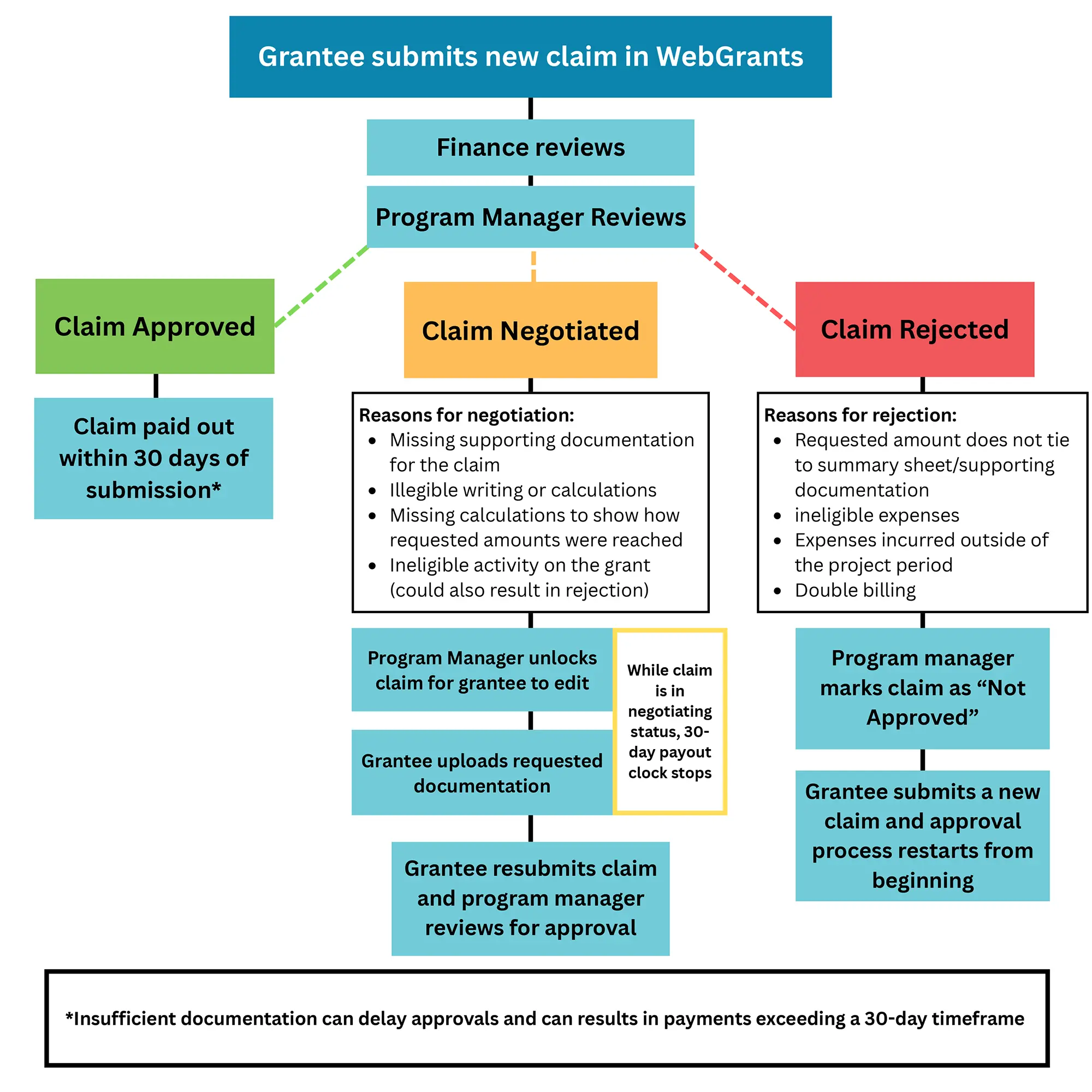
If there are no issues with the claim, the payment will be remitted to the grantee no more than 30 calendar days after submission of the claim. DRPT finance reviews the claim first, then the Program Manager receives the claim for final approval. All approvals should occur within the 30 day timeline.
- If the claim is negotiated back to the grantee for revisions, the claim will be paid out within 30 calendar days of the claim being resubmitted.
What expenses are eligible to submit for reimbursement?
- The eligibility of your expense depends on the type of grant you have been awarded.
Branching logic –
What program are you submitting for reimbursement against?
- 5310 and CAP: Please reference your line-item budget in your contract. See XXX for further details.
- TRIP
- Special
- Workforce development
- Demo and technical assistance
- RTAP (see RTAP hub)
- Small Urban Training (same)
My grant period is ending - when should I submit my final claim?
- The eligibility of your expense depends on the type of grant you have been awarded.
Branching logic –
What program are you submitting for reimbursement against?
- 5310 and CAP: Please reference your line-item budget in your contract. See XXX for further details.
- TRIP
- Special
- Workforce development
- Demo and technical assistance
- RTAP (see RTAP hub)
- Small Urban Training (same)
If my final claim is for more than my remaining grant amount, do I need to submit for the exact dollar amount of the remaining grant?
No. You can submit the claim for all of your expenses for the time period and DRPT will only reimburse you for the exact remaining dollar amount.
When can I start incurring expenses against the grant?
At the start date of the project contract, which is often July 1.
- 5310 exception: All project start dates for 5310 are October 1.
What type of supporting documentation do I need to include with my claim?
Every claim needs clear, legible documentation that justifies each expense. Required attachments include, but aren’t limited to:
- A Summary Sheet listing invoice dates, numbers, vendors, amounts charged, expense categories, and brief descriptions.
- Paid vendor/contractor invoices with detailed descriptions of items or work performed.
- Payroll or financial system reports showing staff time and fringe benefits charged.
- Reports on actual work performed (meetings, events, deliverables).
- Indirect cost calculations and approval letters if exceeding the 15 percent de minimis rate.
- For consultant work, copies of sub-contracts and invoices.
- Copies or images of marketing materials, meeting agendas, or project deliverables.
**Examples of ridership costs, operating costs, examples of claim supporting documentation as attachments
- Create sample invoices/supporting documents based on real examples
What would cause my claim to be rejected?
- Requested amount does not tie to summary sheet/supporting documentation
- Submission of ineligible expenses
- Claims for expenses incurred outside of the project period
- Double billing for the same expenses
What could cause my claim to be negotiated back for corrections?
- Missing supporting documentation for the claim
- Illegible writing or calculations
- Missing calculations to show how requested amounts were reached
- Ineligible activity on the grant (could also lead to the claim being rejected)
Do I need to show backup documentation for any indirect costs incurred?
No
Do I have to request reimbursement for the maximum indirect cost rate?
You can request reimbursement for any amount up to your approved indirect cost rate.
Example: My organization’s indirect cost rate is 20%. I can request reimbursement for anywhere from 0-20% on any claim.
Do I need to remove local match before I submit a claim?
No, submit your claim for the total expense, including local match. You will be paid according to the terms of your contract, with any local match subtracted from the reimbursement.
Example: My organization submitted a claim for $10,000. The local match for my organization is 10%. I will be reimbursed for $9,000.
Background
A “claim” is what DRPT refers to as a request for reimbursement against your grant. All claims must be submitted via WebGrants, DRPT’s grant management system. “Claim” is also the label used in WebGrants. Claims are submitted at the grant level.
Claims are reimbursement based for eligible expenses incurred by the grantee during the grant project period. DRPT does not typically provide advance payments.
When you submit a claim, it will go through two levels of DRPT approval. Finance and the Program Manager will review. The grantee will be notified via email of whether the claim is Approved, Negotiated, or Not Approved.
- Approved: Your claim is eligible and has been approved for pay out.
- You will also be notified via email from WebGrants when your claim is paid.
- Negotiated: DRPT may place your claim on hold for clarifications or missing documents. You can upload additional support in WebGrants on the same claim and resubmit.
- Not Approved: If ineligible expenses or errors exist, DRPT will mark the claim as “Not Approved”. You must then correct and submit a new claim; resubmissions do not count against your one-claim-per-month limit.