
Your Story
The Future Moves on Public Transit
Public transportation delivers advantages that reach far beyond the ride. It helps Virginians save on transportation costs, cuts time lost in traffic, and opens the door to workplaces, campuses, and the cultural and social experiences that make life in our communities vibrant. As driving becomes more expensive and congestion continues to challenge our roads, transit offers a smart, dependable, and cost-effective way to keep Virginia moving forward. And by moving more people with fewer vehicles, public transportation helps reduce emissions and supports cleaner, healthier neighborhoods across the Commonwealth.
Even for those who may never ride, strong transit systems bring real value: less congestion, greater economic activity, and communities that are more connected, resilient, and appealing places to live and work. Investing in public transportation isn’t just an investment in mobility – it’s an investment in a stronger, more dynamic Virginia.
Your Wallet
Public transportation saves individuals and our communities money and is one of the smartest financial investments Virginians can make, whether they ride it or not. The average American household spends over $12,000 per year towards the overall cost of owning and operating personal vehicles. In Virginia, drivers spend over $2,000 per year on gas, more than $1,400 on insurance, and hundreds more on repairs, parking, tolls, and taxes. National studies show congestion alone costs the average driver over $1,200 annually in lost time and wasted fuel.
In contrast, Virginia’s transit systems – 13 of which are fare-free as of 2026, offer a predictable, affordable alternative that puts money back in Virginians’ pockets and support access to jobs, education, and essential services. The average household expense on public transportation fares is less than $800 per year. DRPT strengthens this value through programs like the Transit Ridership Incentive Program (TRIP), which helps transit agencies reduce or eliminate fares, and the Commuter Assistance Program (CAP), which supports carpools, vanpools, and employer-based commuter benefits that reduce commuting costs for workers statewide. By investing in transit, DRPT not only helps riders save money but also reduces congestion, cuts emissions, and protects taxpayer resources by easing the long-term demand for costly road expansion and maintenance: proving that strong public transportation benefits everyone’s wallet across the Commonwealth.

Your Commute
Commuting in Virginia has become increasingly difficult as traffic volumes rise across major corridors. The Commonwealth now ranks as the 10th most congested state in the nation, and drivers lose an average of 35 hours each year sitting in traffic, nearly a full workweek spent not moving. Commute lengths have also grown. Virginia has the 9th longest average commute time in the country, and although we have invested billions in road improvements, congestion routinely remains an issue. These pressures affect every region, from delays on I-95 and I-64 to heavy truck traffic along I-81 and bottlenecks at the Hampton Roads Bridge-Tunnel.
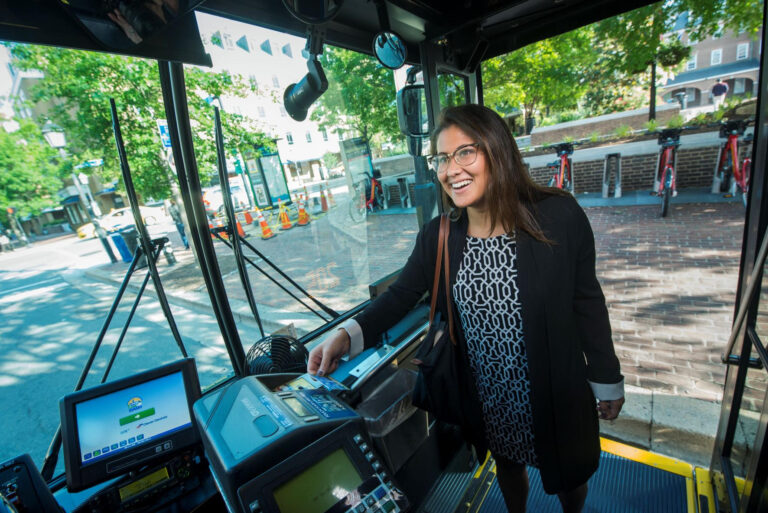
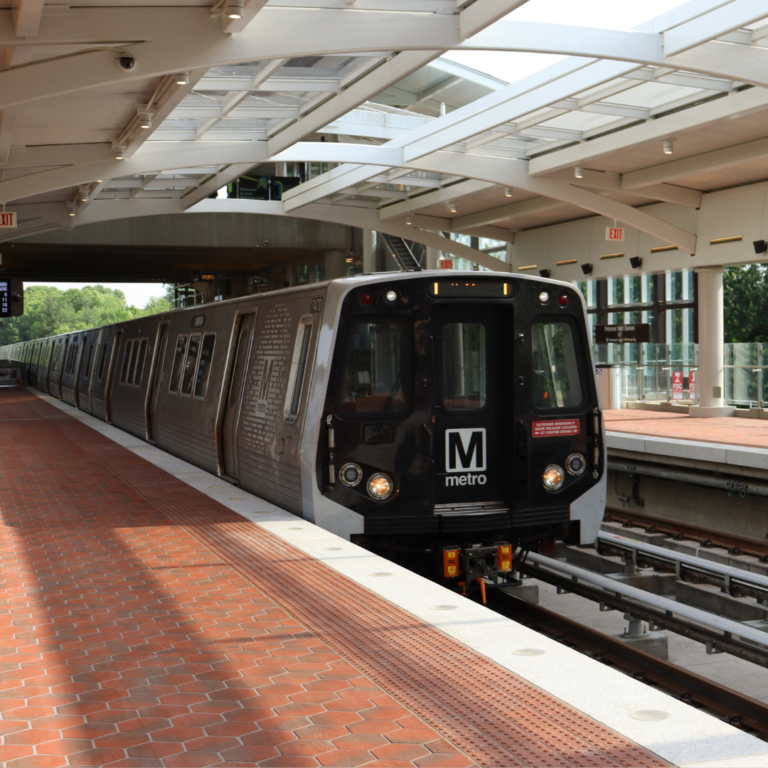
Public transportation provides a measurable counterbalance. When Virginians choose transit, whether taking a local bus in Hampton Roads, Metrorail in Northern Virginia, a commuter bus in Prince William County, or the Afton Express linking the Shenandoah Valley to Charlottesville, they help reduce the number of vehicles competing for the same limited roadway space. Even modest shifts matter: nearly 70% of working-age Virginians currently drive alone to work, meaning even small increases in transit, carpooling, or vanpooling can ease congestion noticeably.
Transit also offers reliability during times when driving does not. Passengers benefit from consistent schedules and predictable travel times, helping commuters across Virginia reach their destinations without losing hours to traffic delays. Collectively, these individual choices strengthen Virginia’s transportation network and support smoother, more manageable commutes for communities across the Commonwealth.
Your Economy
Public transportation is a critical part of Virginia’s business infrastructure, supporting economic growth by connecting workers to job centers, reducing congestion on major corridors, and helping employers access the talent they need to compete. Transit is also an industry in its own right. Nationally, public transportation is a $94.3 billion sector that employs nearly 440,000 people, with job growth in recent years outpacing the national average. Every $1 billion invested in transit creates or sustains 50,000 jobs, and 77% of federal transit funding flows directly to private-sector companies through contracts for services, materials, and supplies. Virginia businesses are significant participants in this supply chain, producing fare collection systems, communication and signage technology, tires, and other components essential to transit operations nationwide.
Transit investment generates substantial economic returns. National research shows that every $10 million in capital investments yields roughly $30 million in increased business sales, while $10 million in operating funds generates about $32 million in economic output. These returns flow directly into local economies: an estimated 87% of transit trips support economic activity, and 37% of all trips involve shopping or recreational spending. From small businesses to major employment centers, transit strengthens commercial districts, increases customer access, and supports the economic vitality of communities across the Commonwealth.
Transit-oriented development (TOD) further strengthens Virginia’s business climate. Redevelopment around Metro stations in Tysons and the Rosslyn–Ballston Corridor spurred population and revenue growth, while Richmond’s Pulse corridor saw a 50% increase in nearby property values and more than 10,000 new homes planned or built. For employers, from hospitals and retail to tech campuses, these multimodal networks improve reliability for workers and help businesses operate more efficiently.
Public transportation delivers measurable value to Virginia’s business community and remains a key driver of long-term economic competitiveness.

Your Environment
Public transportation is one of the most effective tools Virginia has for improving environmental quality while supporting strong, connected communities. By moving more people with fewer vehicles, transit delivers cleaner air, healthier neighborhoods, and a more resilient Commonwealth all without asking Virginians to sacrifice mobility or economic opportunity. Per passenger mile, public transportation produces dramatically lower emissions than private vehicles, generating 45% less carbon dioxide and 95% less carbon monoxide, making it one of the most efficient ways to reduce pollution while still keeping people moving.
In Virginia, where transportation accounts for nearly half of all greenhouse gas emissions, these benefits add up quickly. Every trip taken on a bus, train, or vanpool helps improve air quality, supports stronger health outcomes, and reduces the burden on communities located near major roadways. As the Commonwealth prepares for more extreme heat and rising summer temperatures, transit also helps reduce the urban heat island effect by lowering the need for expansive parking lots and wide road networks that absorb and radiate heat. Reliable transit allows communities to preserve more green space and shade, helping keep neighborhoods safer and more comfortable.
Transit also supports healthier waterways and greater climate resilience. Because transit requires far fewer paved surfaces than auto-dependent development, it reduces the stormwater runoff that carries pollutants into Virginia’s rivers, streams, and the Chesapeake Bay. More compact, transit-supported growth leaves room for natural areas that absorb rainfall and help mitigate local flooding.
Through its investments in rail, bus, vanpool, and multimodal infrastructure, the Virginia Department of Rail and Public Transportation (DRPT) helps communities unlock these environmental benefits every day. Public transportation doesn’t just move people – it builds a cleaner, healthier, and more sustainable future for Virginia.